Jonathan Moore takes a look inside the original brochure from Morrells, the builders of Coney Hall.
“The Foundations of the National Glory are set in the Homes of the People.” These are the words of King George V, embossed on the front of the Morrell Builders brochure that showed off the bold designs built on their new Coney Hall estate in 1933. Auspicious words for an aspirational building plan.
The brochure also covered the Morrell’s sister Garden Estate at Petts Wood, which was constructed in the same period and used the same house designs. A full range of train and bus options were provided for prospective buyers to come and see the new estate, and Morrell even offered the incentive of a free travel voucher, valid for any station on the Southern Railways within an impressive 50 miles of either estate.
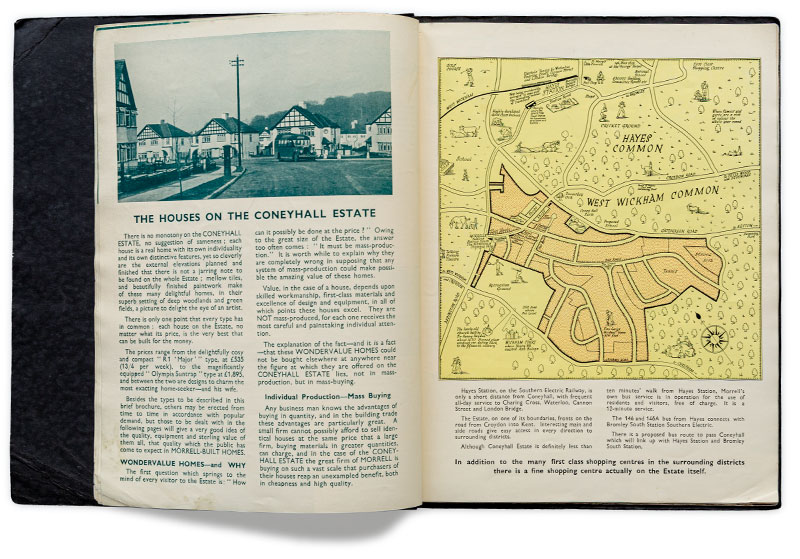
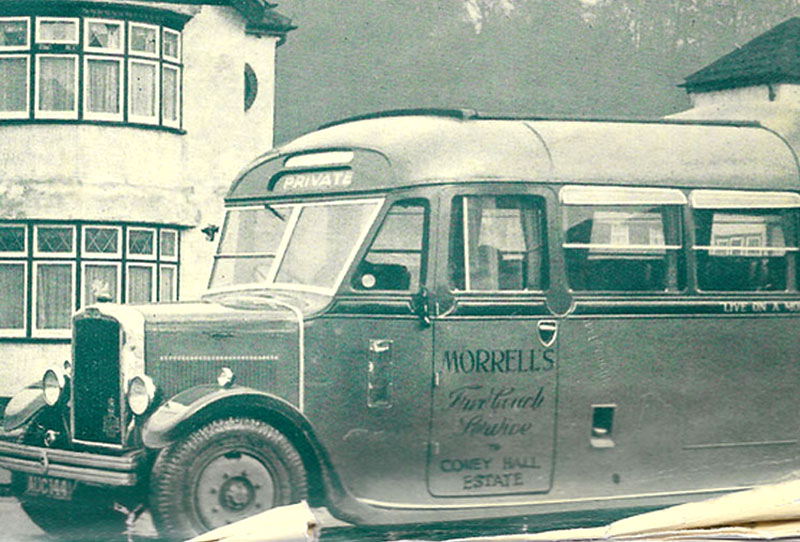
Morrell sang the praises of Coney Hall – then titled the Coneyhall Estate – as an idyllic countryside location combined with modern amenities: schools, shops and modern transport links were all part of the plan. Morrell even laid on their own free ‘luxury coach’ service, providing Coney Hall residents with a direct transport link to Hayes Station (and the Southern Electric Railway) from 7:30am to 10pm.
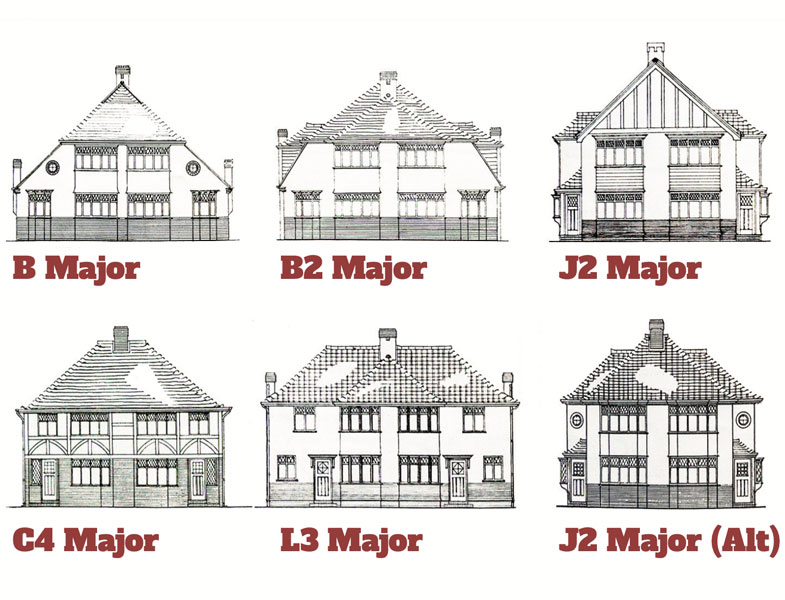
House prices ranged from £575 for the two-bedroom J2 Major to £895 for the four bedroom B3 Major; prices included a free removal service if you were moving within a 25 miles radius.
The sales pitch stressed quality, not quantity: ‘A town of gardens, of wide, tree-bordered streets, and the finest homes which skilful architects can devise and British craftsmen can erect’, was how Morrell described the houses, with the keen prices for their ‘Wondervalue Homes’ down to mass-buying, not mass-production.
The designations that the Morrells assigned to each house design aren’t particularly exciting at first glance (the ‘Suntrap’ model aside), but the important thing is that these designs are the houses we live in, now coming up to celebrate their collective 91st birthdays, and still going strong thanks to those solid design foundations.
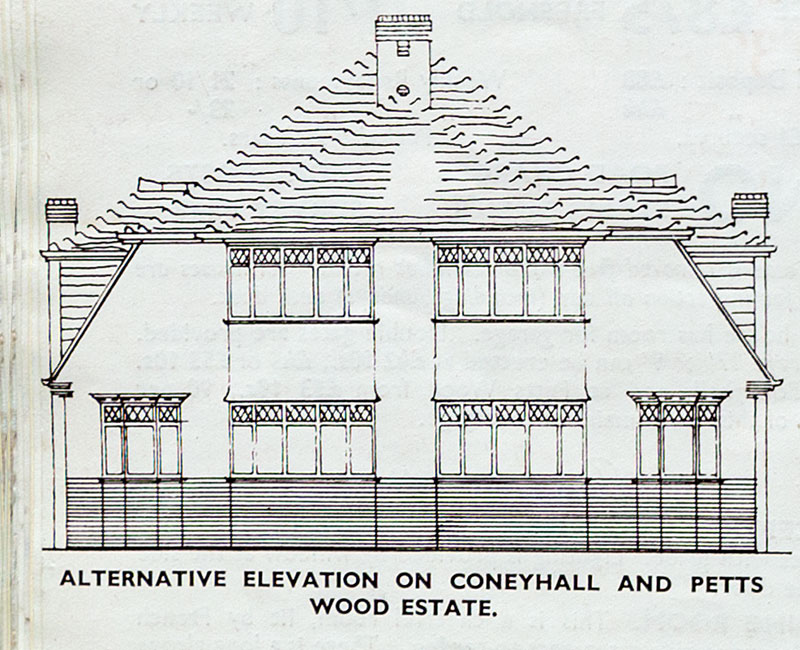
One of the many nice things about Coney Hall is that the models are interspersed: there are few runs of a single design. Even as I look out of my window halfway down Sylvan Way, opposite me I can see a B Major pairing flanked by B3 Majors (the porthole windows give them away – otherwise they’d be B2 Majors with three bedrooms rather than four when built). Just up from me are DC1 Detached Chalets. We’ve also got a number of B2 Majors.
Just a half-dozen of the beautiful Art Deco-style Suntraps were built, but on Addington Road you can also see Morrell’s other Art Deco design. It’s their showcase Olympia Suntrap, voted house of the year at the 1934 Ideal Home Exhibition. This magnificent house was designed by Kemp & Tasker, who were also responsible for the building that is now Wickes but was originally a motor showroom and cabaret venue .
Some additional variations were built ‘according to popular demand’, so currently we don’t have a definitive list of all the base designs. Also, many of our houses now have extensions, so sometimes it takes a second look and a keen eye to identify the original model under the alterations. But once you know the core looks and signature details, it’s hard not to try to identify the original models in our area when walking round.
 Coney Hall Village Residents' Association (CHVRA)