Jonathan Moore investigates the origins of this iconic building in Coney Hall.
We’ve all been past the local Wickes in Coney Hall, and likely dropped in for a tin of paint or something more substantial. But the building that we’ve all known for many decades as a DIY store has a much grander and storied past than you’d expect.
Like me, you may have only paid attention to what’s on the shelves inside Wickes – but look beyond the slightly tatty exterior and the form of a beautiful Art Deco building becomes apparent. Look past the phone masts, the peeling paint and the incongruous first floor extension that skewers its left side. Instead notice the form of the building: its intriguing asymmetry; the imposing staircase tower; its bold curves. Imagine the lower floor as it would have been, with impressive full-height glazing, making the upper floors appear to float.
Hints of a more glamorous time
These architectural details point to the building’s surprising origin: as a high class venue, built contemporaneously with the houses we live in today. The building’s design aimed to combine the fads that were sweeping the nation in the heady decade of the 1930s: cars and clubbing.
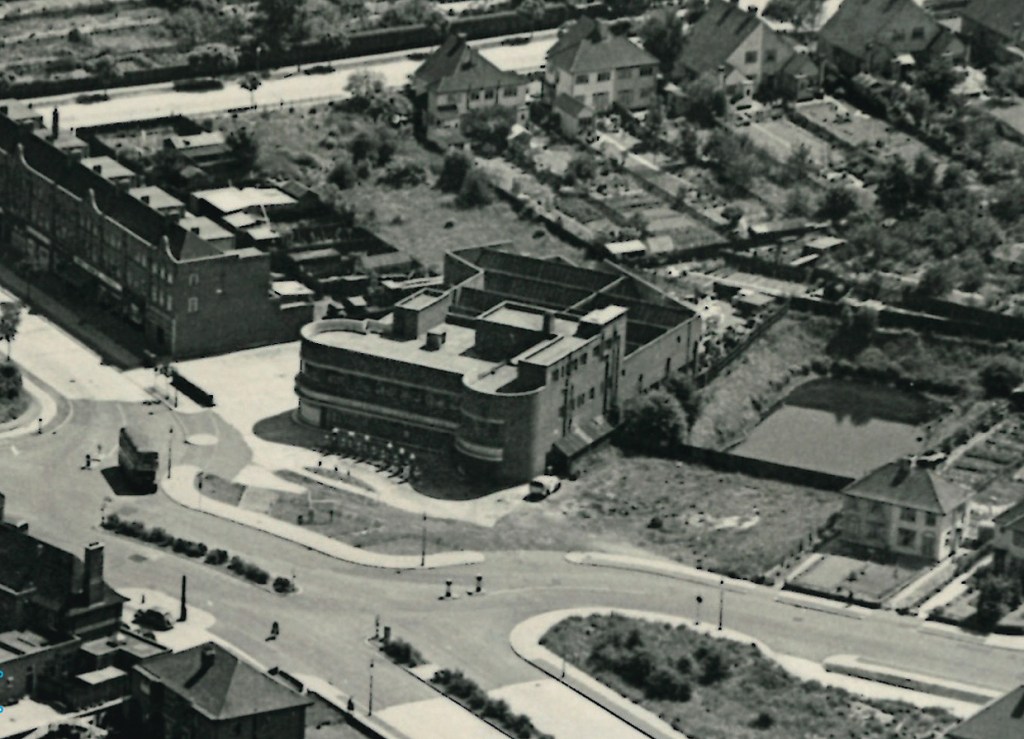
It’s April 1935. Coney Hall has already been transformed from a sleepy idyll of farmers fields and the odd passing hay wain into a brand new urban development built around the latest ideas of ‘garden’ estates. A grand housing project (then stylised as the ‘Coneyhall Estate’) initiated by the enigmatic Morrell brothers’ building firm has created the layout of streets and houses we live on today. They plan in local schools, shops and recreational areas on the periphery to cater for the influx of families. But their ambition doesn’t stop there: they want to make their new flagship estate a destination. Not only that, but a destination built around the revolution in motor car ownership.
Destination: Coney Hall
There were less than a thousand cars in the UK at the turn of the 20th century. By the 1930s there were already over a million cars in private ownership (for a population of 46 million). Horsepower now meant something else – freedom. Cars were no longer a luxury only enjoyed by the elite. This tied in perfectly with Cyril and Stanley Morrell’s vision for the area, to create both a focal point for residents and to make Coney Hall into a modern and exciting locale.
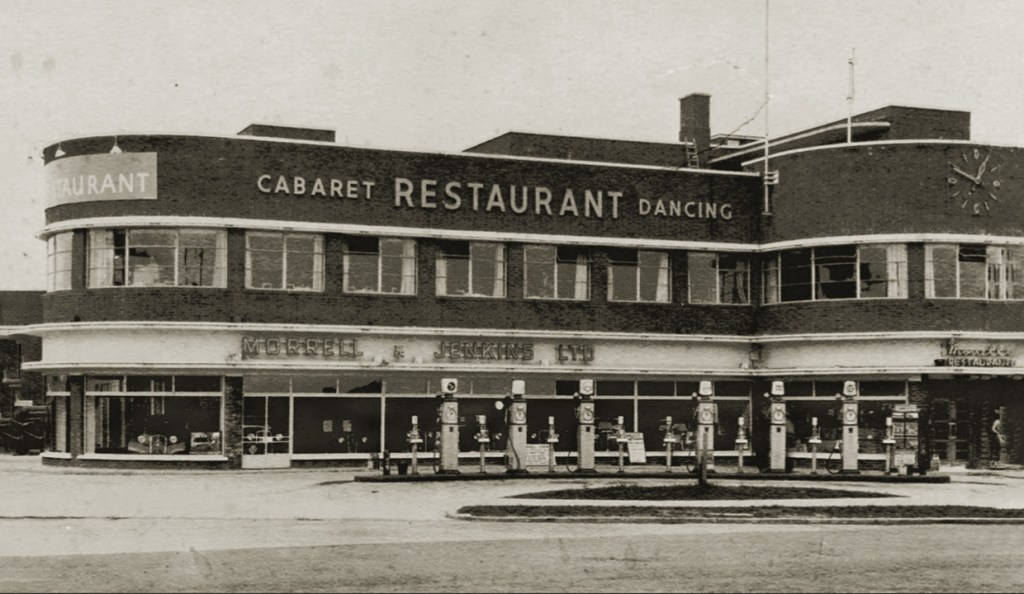
The Morrells didn’t hold back – starting with the Morrell & Jenkins Ltd Motor Showroom. It was a temple to the motor car, with forecourt petrol pumps, an impressive car sales area encased in a wraparound glass frontage and a full suite of servicing and engineering areas hidden away out back.
The story goes that one of the brothers’ wives was a keen dancer and suggested the addition of a dancehall: and so the idea of Morrell’s restaurantand cabaret was added. The two complemented each other perfectly, and the resulting building delivered on all the aspirations of the period.
Coney Hall’s location played to the Morrells’ advantage, being on the main road from London and Croydon into Kent. The building cost around £25,000 to build – equivalent to an eye-watering £2.25m today – and although its Art Deco styling seems incongruous to the mass of Mock Tudor that makes up most of the estate, it’s a style picked up across Coney Hall if you look carefully, and part of the Morrells’ original housing design options.
Ideal homes on show
Dotted around our estate are little clumps of archetypal rectangular and flat-roofed Art Deco houses, specifically on Gates Green Road, Hartfield Crescent and Addington Road, all designed by renowned contemporary architects Kemp & Tasker.
The building on Addington Road, previously part of the GP health care centre and
now temporary home to West Wickham Library, was displayed to much acclaim in the Ideal Home Exhibition of 1934. And for the design of the Morrell & Jenkins Ltd Motor Showroom, Kemp & Tasker were allowed to let their love of Art Deco run wild. The building would have been amazing to visit in period.
The highest standard of entertainment
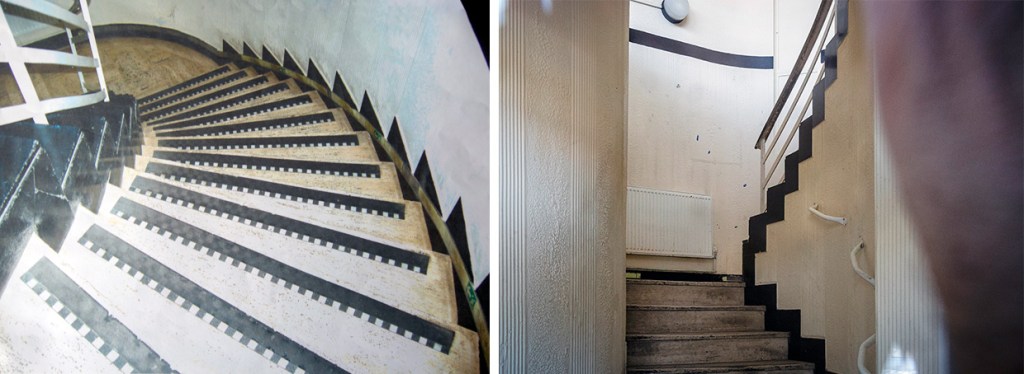
After browsing the latest cars in the elegant ground floor showroom, one could saunter round to Morrell’s Restaurant entrance, through the opulent double doors and ascend the curving staircase (accented with classic black and white Art Deco tiling) to the first floor vestibule. There you’d find an American-style cocktail bar (all the rage of the time) and the cloakrooms. Stepping through to the main space, it’s been described that you’d feel like you were walking onto the railed deck of an ocean liner, the expansive windows curved like the prow of a ship.
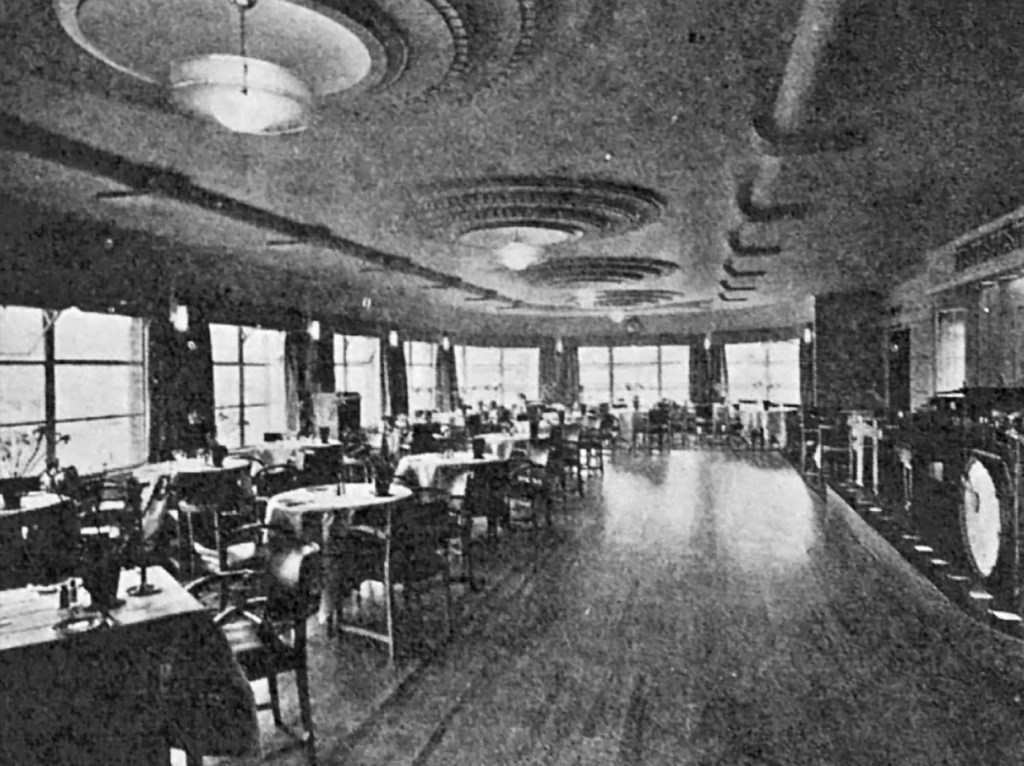
The Morrells’ goal was to “provide the highest standard of entertainment”. Class and sophistication were their guiding principles. The furniture and interior decoration were all in the fashion of the time. The walls were decorated in soft pastel shades, with a rich carpet covering a sprung maple floor made expressly for dancing. An elegant mural was the backdrop to the stage where the band played.
Three electric lifts conveyed plates to and from the kitchen on the roof for the 250 guests that could be accommodated each night, with fixed price and à la carte menus on offer. Every modern technology was exploited: they even had an ‘electrically controlled’ refrigerator and ice cream machine. A roof terrace was planned, which apparently opened later that summer – and of course there was free parking.
They engaged a Mr Tschanz as the manager, someone well regarded in period. The Bystander (a society magazine that would later become Tatler) described him: “The manager knows his job very well and looks after his guests with discrimination.
He has had a lot of overseas experience: in Egypt, where he was at Shepherd’s in Cairo, at Mena House and on the famous Cairo-to-Khartoum river cruises; and in India, where he once spent six months training the staff of the Maharaja of Vizianagram.”
A grand night out
Morrell’s Restaurant opened its doors on Thursday 11 April 1935, with an official ‘house warming’ gala night party the following Monday. Newspapers covered the opening, and the reviews were glowing. It delivered a truly West End experience, with glitz and glamour transported to Kent. Merlin Morgan And His Music, known for residencies at The Trocadero, provided the backdrop to the dancing; the fabulously named Tanz and Equilibristik performed contortions with ‘a perfect rhythm of movement’ according to the Kentish Times; celebrated trickster and pickpocket Giovanni promised ‘no funny business’ – but funny business there was!
This lavish opening night lasted six hours. There were toasts to the Morrells and dancing continued until 2am. Local newspapers raved about it, making it the place to be seen.
Civilised late afternoon Tea Dances three days a week were complemented by further grand cabaret evenings; there was a special Gala night for the Silver Jubilee of King George V.
But the heady times were not to last. To say the 1930s was a tumultuous time is obviously an understatement. The decade started as the Great Depression kicked in and ended with a second World War. The Morrells rode a wave of optimism, but they’d hopelessly overstretched themselves. By 1937 the various companies they owned had fallen into liquidation: the dream was over.
The building’s history from this period on is sketchy. During the Second World War it was apparently used as officers’ accommodation for a Canadian Army unit; it seems to remain a petrol station in the immediate post war period. The first floor was used as offices for various businesses and charities, while the ground floor showroom and warehouse areas have been used by successive DIY chains since the 1970s.
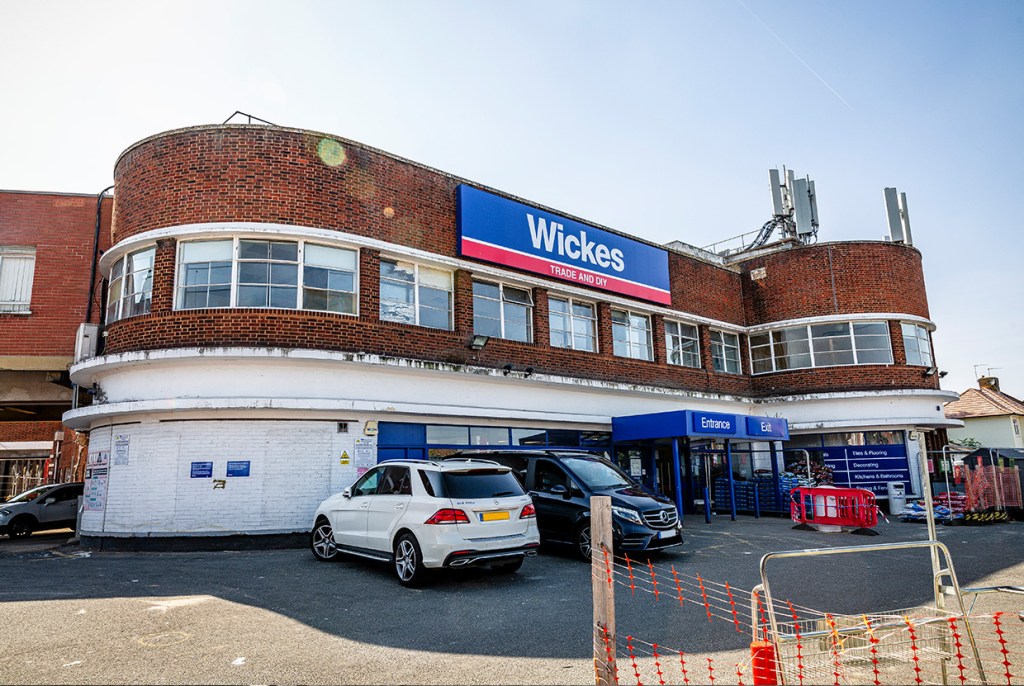
The passing years have not treated the building well
So we get to the present day. The glass facade of the ground-floor was partially bricked in decades ago and the once gleaming paintwork is now cracked and peeling. The brickwork is still sharp, but the ‘80s extension ruins the lines of the building. Access to the upper floors is limited: it’s reportedly in a poor state from lack of maintenance. Wickes’ plans are unclear, although they’ve extended their ground floor lease, and a housing development for the entire site is still on the books. The Residents’ Association are trying to record the remaining elements, in tandem with Bromley Historic Collections, while also trying to get clarity over the long-term future of the building. We hope that at the minimum it can be stabilised and cleaned up. It may never become the beacon of Coney Hall that it once was, but it’s an important building at the heart of our village – deserving of both care and attention.
Thanks to the Bromley Historic Collections for their help with sourcing archive material for this article. Their local studies collection includes books, maps, photos, local newspapers, pamphlets, and street directories. They can provide assistance and advice for your research into local and family history.
 Coney Hall Village Residents' Association (CHVRA)