
Local resident and Well Wood expert Tom Thorn digs into the history of his house on Birch Tree Avenue.
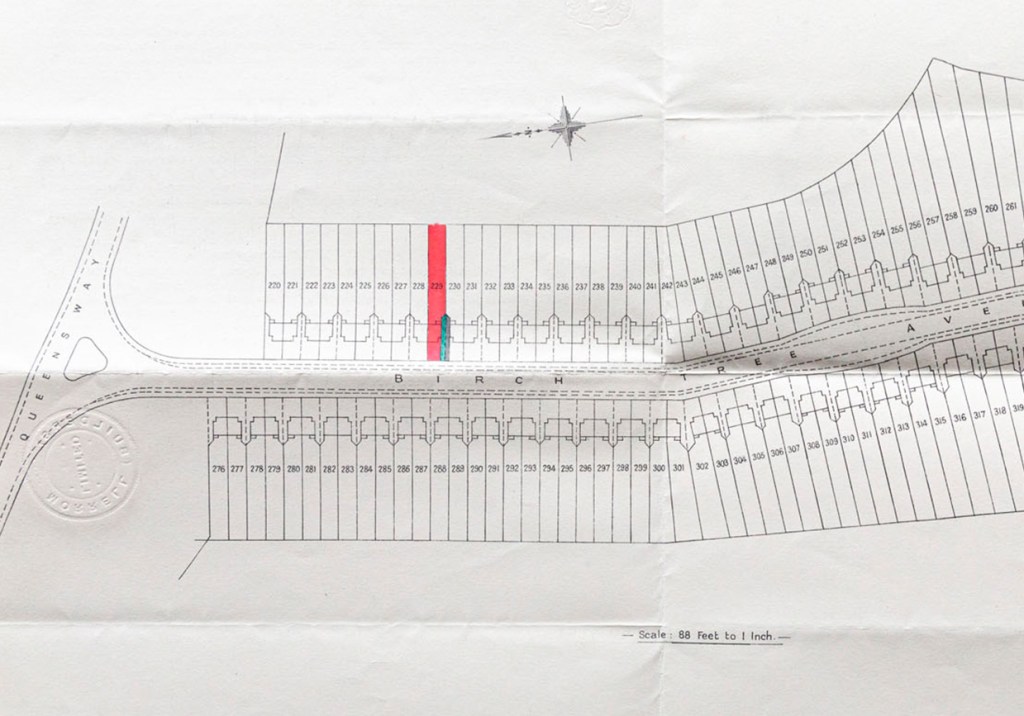
Today there are just 140 houses on Birch Tree Avenue, and yet my parents bought 229 Birch Tree Ave in 1966. How? I’ll explain…
In the paperwork that came with the house, there were several original documents from the previous owners, who had purchased the property from new. These documents, together with a letter we found dated 1902, tell the story of the house and the people who lived there.
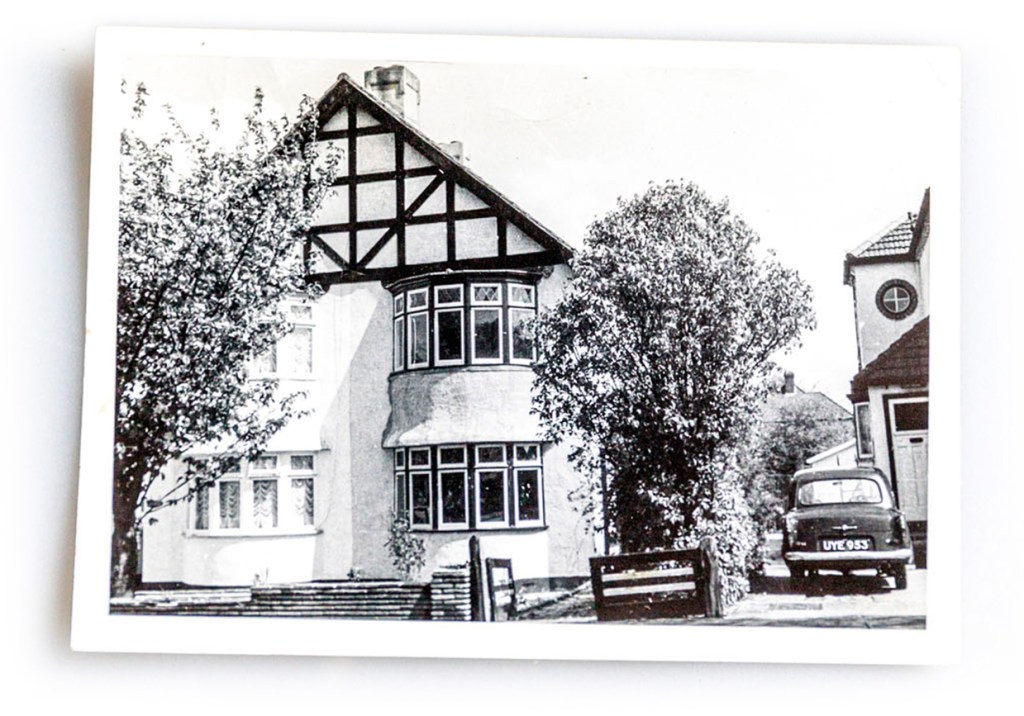
William and Beatrice Farrant moved to Coney Hall from Woodside. William was a lab superintendent and married Beatrice in 1914, when she was 27. They signed the contract for the yet to be built property on 18 November 1933, with a completion date due on or before 17 January 1934. They agreed the sum of £430 would be paid to the builder once the property was fit for habitation (with the exception of wall-papering), and set up a mortgage with the Huddersfield Building Society.
In the early days, the Coney Hall Estate was hard to navigate. The houses were marked as either the house number, plot number or house name. William and Beatrice named their house Clenstone, perhaps because Beatrice grew up 2 miles from Winterborne Clenston in Dorset.
The Coney Hall Estate was a postman’s nightmare
You may remember Jim and Elsy Borders, the instigators of the 1937 mortgage strike, called their house ‘Insanity’, simply for the joy of giving their address as ‘The Borders of Insanity, Coney Hall’.
Referring to the houses by name was sometimes funny, but it was also a postman’s nightmare, as they had to remember the location of every name. As far as the council was concerned, something had to give.
A letter from Beckenham Urban District Council dated 28 February 1935 directed the Farrants of Plot No 229 Birch Tree Avenue, Glenstone (corrected to Clenstone), to display the correct house number within a week. From then on, every house on every street followed the same numerical pattern.
The war nearly brought the end to Clenstone
The Farrants settled down to life in Coney Hall and appeared to be keen gardeners. At some point they had a dog called Chum, who, from a photo found in the house, looks to have been a fox terrier. Later, Chum’s gravestone would stand in the garden, and even now crocuses come up each spring at the grave site.
In the Second World War, on Wednesday 16 April 1941, West Wickham was rocked by at least 20 large bombs – one of which narrowly missed Clenstone, instead destroying a neighbouring house that wouldn’t be rebuilt until 1948. But that’s not to say that Clenstone came through the war unscathed.
The windows seem to have been replaced with very thin glass (no doubt bringing the energy rating down to an all-time low). There’s also a tale of a low-flying Spitfire spraying bullets in pursuit of a German aircraft. When a neighbouring property had the roof replaced, there was a line of small holes in the tiles and similar holes – perhaps bullet holes – have been found in tiles at Clenstone.
The property became neglected and dilapidated
Alas after 30 years the dream was over. William died at home in 1963 and Beatrice had been in a care home for several years by the time her niece sold the property on her behalf.

The house had been neglected for some time and was dilapidated. It was hardly visible from the road due to the bushes and trees. The once proud garden was overgrown, with a collapsing arbour, sheds and sorry ornaments – but three apple trees were still bursting with fruit.
The apples trees are a reminder of Coney Hall’s orchard
Work began on the property. The air raid shelter was sadly dismantled – denying the next generation of kids the perfect clubhouse – but the coal bunker lived on. The perfect hiding place, it was the reason many a child went home grubby.
As for the apple trees, apparently the first residents of Coney Hall were encouraged to plant them, and a local farm gave young apple trees away. These were apparently grubbed up from an orchard to make room for the new-build houses. There’s also a theory that some of the trees in the orchard were left in place and these account for some of the garden trees.
From personal memory (and from a photo out the back of the house in 1966) apple trees were very common in the gardens. So if you have an old apple tree, it could stretch back the early days of Coney Hall, or even pre-date it. These veteran trees serve as monuments to the hopes and dreams of the original residents.
 Coney Hall Village Residents' Association (CHVRA)