Each season, the Rangers for Spring park and Wickham Common share their latest news. They cover what to look out for now, and the work that’s been going on over the season…
Letting the light back in
There was plenty of teamwork, hard work and a fair bit of sawing during a recent task day on West Wickham Common, as the West Wickham Commons Ranger was joined by the wider Coulsdon Commons Ranger team to tackle a dense stand of holly along the edge of the heathland and around the viewpoint.
Armed with an impressive collection of saws and a trusty tractor-mounted wood chipper, the team set to work cutting back a huge swathe of holly that had gradually become overgrown. While holly is an important native species, too much dense growth can cast deep shade, preventing light from reaching the ground below. By opening up the area, we’re hoping to encourage a greater variety of woodland plants helping to improve the diversity of this part of the common.
The work also revealed a few less pleasant surprises! Hidden beneath the holly were plenty of forgotten relics, including old bottles and other historic litter. It seems the vegetation had been hiding quite a collection, so alongside our habitat improvements, we managed to give the area a much-needed clean-up too.
A huge team effort, with plenty of brambles, branches and woodchip to show for it! We look forward to seeing how the newly opened areas respond over the coming seasons.
How do you record a bat?
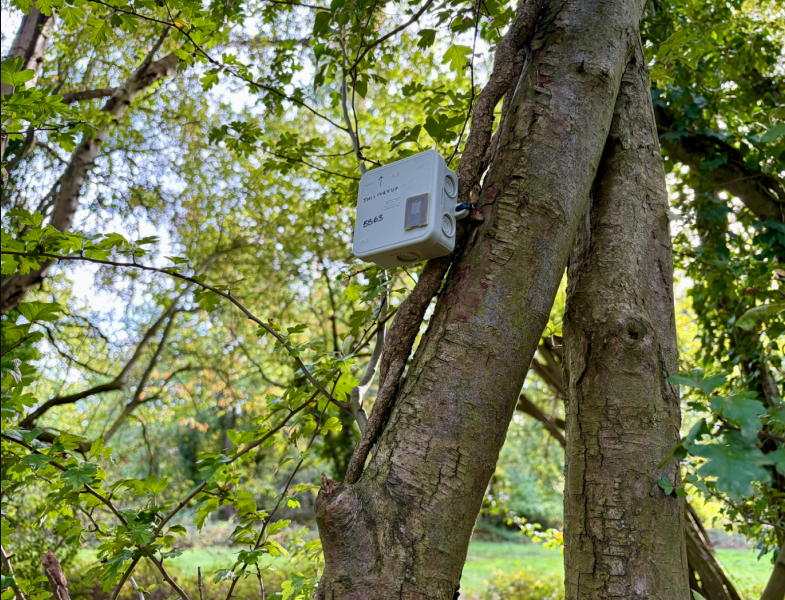
Bats are notoriously difficult to spot, with most of their activity taking place after dark. Unless you’re in the right place with a handheld detector, it’s hard to get a clear picture of which bat species are present. So how do we find out which species are using the site? The answer is to listen in using specialist recording devices that help us identify which bats are flying overhead.
Throughout October, our Conservation Ranger has been working with the London Bat Group, who kindly lent us specialist AudioMoth devices to deploy across Spring Park. AudioMoths are small, weatherproof acoustic recorders that detect and record the ultrasonic calls bats use for echolocation. These calls are far too high-pitched for human ears to hear, but specialist software can analyse the recordings and help identify the different bat species.
Species to see this Autumn and Winter
Although the days are shorter and the trees are losing their leaves, there’s still plenty to look out for on your walks over the coming months.
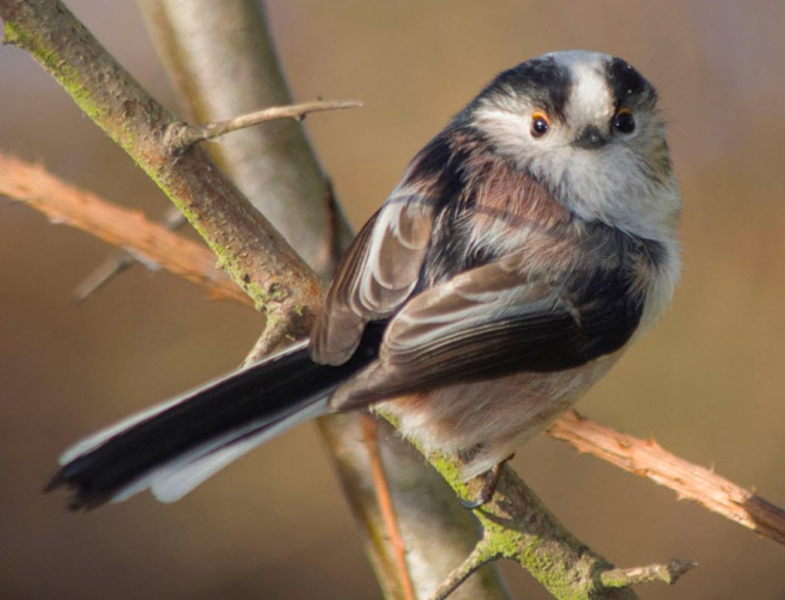
Keep an eye on the conifer trees for one of our smallest birds, the Goldcrest. These tiny, energetic birds flit between the branches in search of insects, often revealing themselves through their high-pitched calls. You might also spot lively flocks of Long-tailed Tits moving through the trees and hedgerows, often accompanied by other small woodland birds.
Look upwards across the meadows at Spring Park and you may be lucky enough to see Red Kites soaring high overhead. Their distinctive forked tails and graceful, effortless flight make them a wonderful sight against the winter sky.
And don’t forget to look down! Damp autumn conditions bring out a fascinating variety of mushrooms and other fungi, from tiny woodland species to much larger, striking fruiting bodies. They play an important role in breaking down dead wood and leaf litter, recycling nutrients and keeping the woodland ecosystem healthy.

