Each month, the rangers who look after Wickham Common and Spring Park send an update. If you don’t subscribe, here’s their latest news.
Shaping spaces for butterflies
The Rangers have been busy this season making West Wickham Common and Spring Park even more welcoming for our local butterflies. One of their key tasks has been cutting large “scallops” into the woodland edges. By breaking up the straight lines of the woodland boundary, these scallops create a more varied transition zone, known as an ecotone, where open grassland meets woodland.
These sunny, sheltered edges are perfect for invertebrates that love the warmth, including many butterfly species. The new scallops not only improve habitat diversity but also allow more light to reach the woodland floor, encouraging a richer variety of plants that provide nectar and breeding sites for butterfly species such as the Comma (Polygonia c-album).
Historic earthworks await new information board
Until recently, visitors could learn about the mystery of the West Wickham Common earthworks from an on-site information board at the edge of the heathland. Unfortunately, the board had to be removed recently due to extensive vandalism. We hope to replace it in the near future, so that people can continue to explore and appreciate this remarkable piece of our local history.
The age and origin of the earthworks have long sparked fascination and speculation. A defensive ditch on either side of an entrance causeway forms an incomplete ring, which may once have been reinforced with a palisade—a row of spiked logs. While this could mark the beginnings of an Iron Age hill fort (800 BC–AD 43), it remains a mystery why construction was never completed.
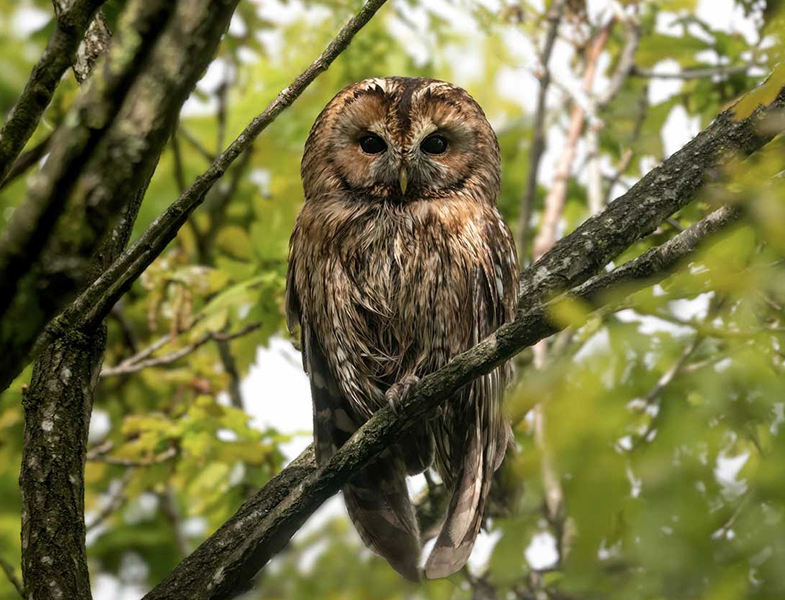
Bird of the month: Tawny owl
The tawny owl (Strix aluco) is one of our most iconic woodland birds, instantly recognisable by its haunting “twit-twoo” call on autumn and winter nights. These nocturnal hunters feed mainly on small mammals and insects, silently swooping through the trees thanks to their specialized feather structure that muffles their flight.
Tawny owls nest in tree cavities and can be very tricky to spot due to their fantastic camouflaging. Keep an ear out at dusk, and you might be lucky enough to hear one if you visit Spring Park or West Wickham Common!
(Photo of the tawny owl on our website ‘borrowed’ with thanks to West Wickham Commons!)
 Coney Hall Village Residents' Association (CHVRA)