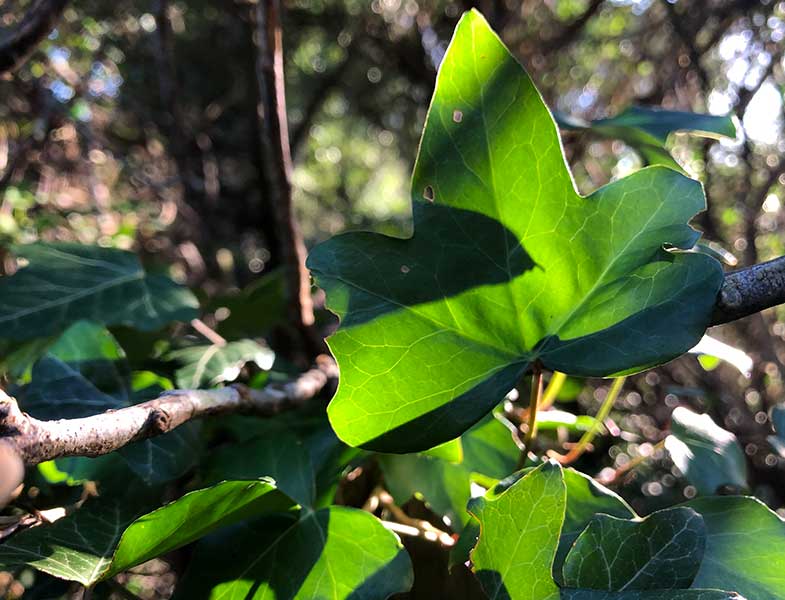
The West Wickam Commons newsletter brings us the news that the winter work programme is in full swing, and the the volunteers have been back to tackling some of the densest pockets of holly on West Wickham Common, restoring the vitality of the woodland understory. The group set about to remove the holly using handheld loppers and bowsaws and, within just a few hours, there is a considerable difference in the area with more light now able to penetrate to the ground.
This extra heat and light will encourage native shrubs and trees like hazel, oak, and rowan to grow in place of the holly. The additional light will also be welcomed by invertebrates, particularly butterflies that require either direct or dappled light, such as the speckled wood, comma, and purple hairstreak.
Following this summer’s drought, the pollarding of ancient trees has been paused this autumn to ensure no further stress is caused to them.
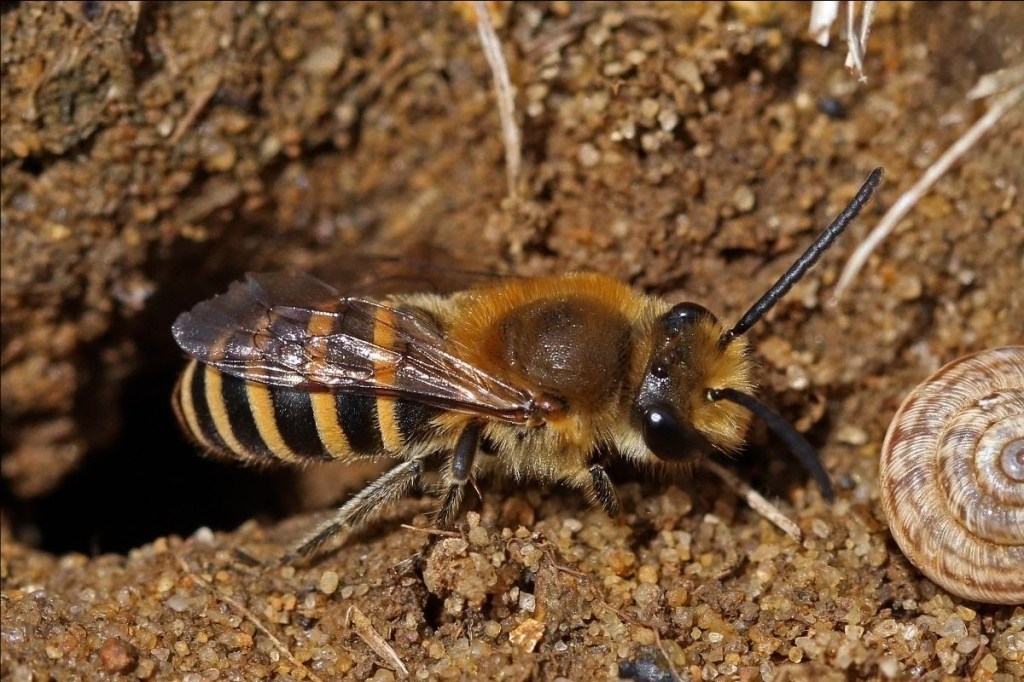
Spotlight on ivy mining bees
The newsletter also tells us to look out for the tiny but busy ivy mining bee, a specialist species that relies on late-blooming ivy for nectar. These small, solitary bees are gentle and effective pollinators, quietly visiting ivy flowers on sunny days.
Unlike honeybees, each female digs her own burrow in bare soil to lay eggs, creating a network of small tunnels – often visible on paths, high footfall areas, and among short grass. While solitary, when conditions are suitable, there may be thousands of nests in the same area.
Volunteers are always welcome
Wickham Common: The next session for volunteers at Wickham Common is Friday 31 October, 10am to 2pm. To be added to the mailing list for volunteering and updates on where to meet and times etc., please email them and pop along to find out more.
Well Wood: The Friends of Well Wood meet on the third Saturday of each month to carry out tasks which benefit and enhance the wood for wildlife and visitors. Over two to three hours they tackle everything from litter picking to tree planting, cutting back paths and improving the habitat for the native plants and animals that live there. They meet at 10am at the Layhams Road Car Park, the next dates are 15 November and 20 December.
 Coney Hall Village Residents' Association (CHVRA)